


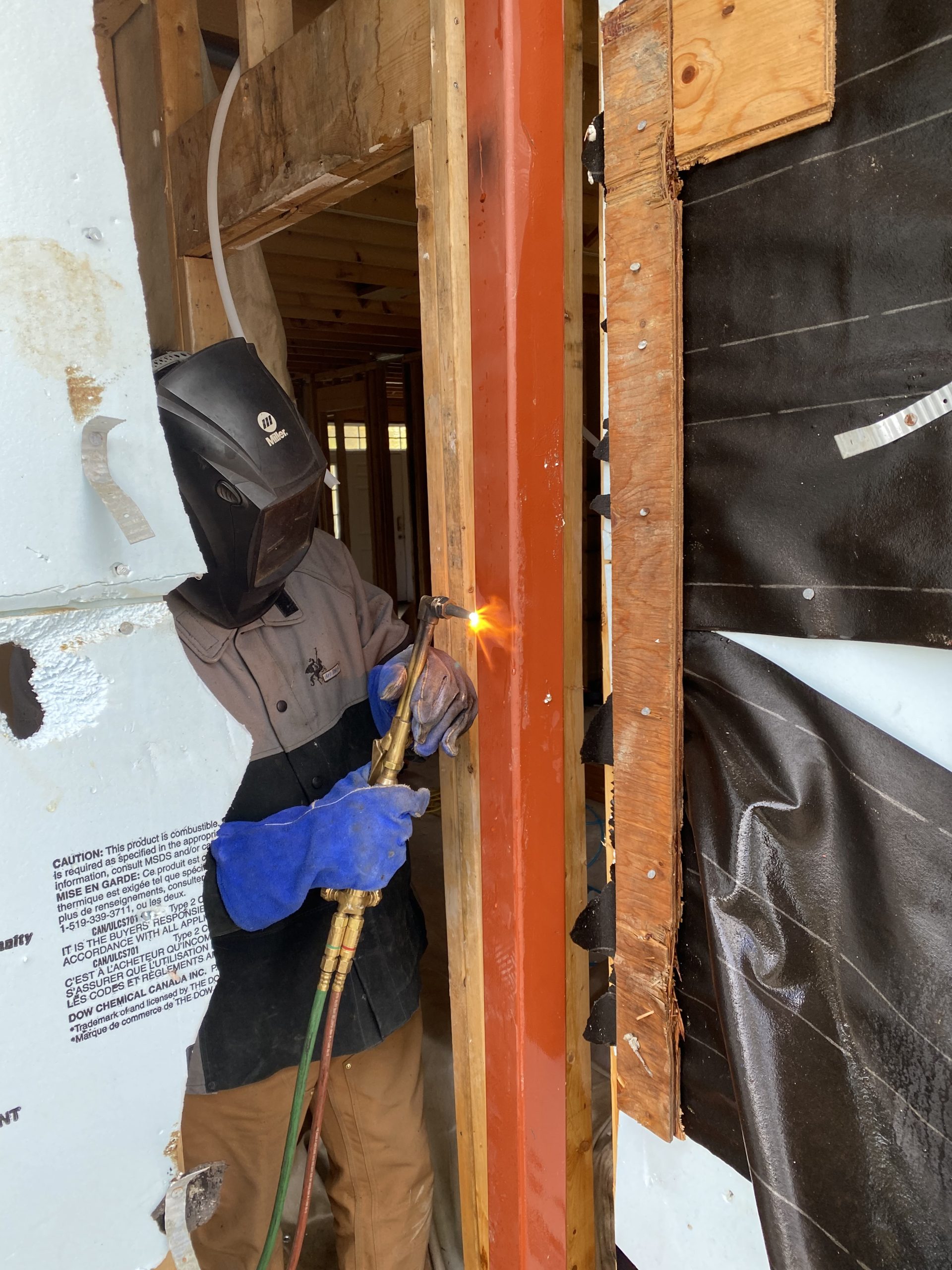
Torch cutting techniques and proper fire hazard elimination are crucial for success in mobile welding business. The torch cutting service supports mobile welder’s business and is essential to increase project’s efficiency. JW Portable Welding & Repair uses steel cutting with torch as a supportive activity in many of our projects in construction, manufacturing and maintenance industries. However, we also provide on site torch cutting service as stand alone service.
We also are very well know for elimination of fire hazard in variety of settings. In simple terms, according to our policies we do not strike an arc or spark until fire hazard is still present and not mitigated. Communication with client plays a major role here since we have to become aware what flammable materials are present on the project. And how combustible they are. Hiding information from us does not make sense since we tend to take samples of these materials and test them first with our torches.
The article you are reading is based on our combined experience of almost 70 years in using torch cutting in Ontario in variety of settings and in variety of positions. We have cut steel up to 5″ thick with oxy acetylene torch and as thin as 1/16″ since we could not use other tools to cut it. We have used medium duty torches, heavy duty torches and demolition torches. Additionally, we have used all kinds of torch tips from # 1 to # 20.
We also use variety of “rosebuds” for preheating. To find out more about our technological advancement please visit our innovative product weldments page.
Call us, text us, or email us if you require torch cutting service. You can also leave the review us on our google profile.
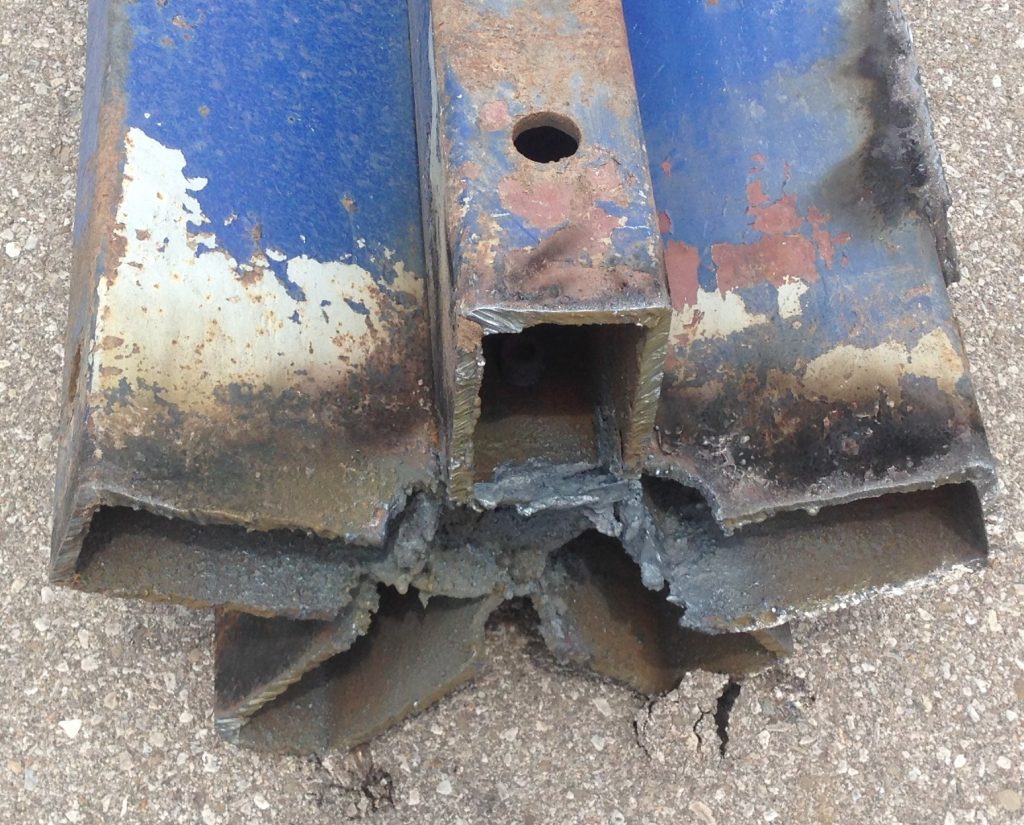
Most often we tend to cut steel on site with grinders equipped with cutting steel wheels. As mobile welders we are well equipped with variety of grinders. And, on every trailer, you would find a good selection of cutting wheels for different grinders from 4 1/2 up to 7 inch. We also carry on every trailer chop saw with 14″ cutting wheel. And, recently we have purchased a German chop saw for cutting dry with blade relatively thin steel and aluminum.
As much as we use a plasma cutter in the shop, in mobile welding the plasma cutter becomes less practical since we cut rather thick steel, and we do not carry a large compressor on our trailers. Therefore, if we have to cut steel in place and we do not need a precise cut of cutting wheel, we will often resort to torch cutting.
Here are basic rules of handling the torch. Certainly, if you are well familiar with this equipment please move on to more advance sections of this article. However, if you are an apprentice or a novice this section is for you.
In order to cut the steel with the torch, you must first set up the torch. That means, you have to connect your torch to tanks. These tanks have a sticker written on them that says oxygen or acetylene. But, first you have to install torch gauges on these tanks. The oxygen gauge goes on oxygen tank and the acetylene gauge, you guess it, goes on acetylene tank.
The acetylene gauge has usually numbers 5 psi, 10 psi, and 15 psi. Operating the torch with psi above 15 makes acetylene unstable and very, very dangerous. That is why in most acetylene gauges pressures above 15 psi are red. Most shops run their torches at about 10 psi. The same applies to our shop but in mobile welding we run our torches at about 12 psi. That means we run our torches at slightly higher pressure and slightly hotter for every set up.
The oxygen gauge contains usually numbers up to 200 psi. We usually run our torches at about 60 – 75psi, however in some special projects we have run our torches at 120 psi. Since during normal operation of the torch worker uses about 2 times more oxygen than acetylene, the oxygen becomes more expensive than acetylene per each cut. Therefore, we try to be sensitive regarding the blowing action of our torches.
Each gauge / regulator has also a gage that indicates the pressure in the tank. The industry uses variety of tanks. And, generally speaking higher pressure of tank indicates that you can keep cutting steel longer. Also, gages on larger tanks decrease slower since these tanks contain more gas. Moreover, if you do not have any size restrictions and you plan to run torches often, it is worth it to lease larger tanks due to price savings. You can buy smaller and more portable tanks, but for larger tanks leasing is the only option left.
Torch hose contains green hose and red hose, joined together. The red hose is for acetylene and green hose is for oxygen. You will have to connect both ends of the hose to the torch and then both ends of the hose to appropriate tanks. Please remember however, that all connections of the red hose have the left thread.
Flashback arrestors protect the whole system from flashback, that is flame going backwards to the hose and to the gauges. Therefore they reduce the fire hazard on the job. You can install these arrestors on torch or on gauges. Both types of arrestors are directly connected to the hose but they have slightly different functions. Arrestors installed on the torch protect the hose, gauges and tanks. The arrestors installed on the gauges sacrifice the hose. Please pay attention also for flow direction marked on the arrestor since it will indicate how to connect the arrestor. It is worth mentioning, that our torches have arrestors installed on torches.
When handling the torch PPE is very important, and do not allow anybody to advise you otherwise. Welding gloves, welding jacket, shades or welding helmet set for cutting are a must. Especially for beginners it is very important to have welding gloves. The normal construction gloves contain the fabric material and do not provide sufficient protection against burns.
The unexperienced users make small cuts in thin steel with medium or light duty torch. Apprentices usually make these cuts in the shop during metal fabrication and other unexperienced users can make these cuts in their own garages.
Before making a spark with the flint striker or flint lighter, you must first eliminate fire hazard from surrounding space. Please take a very critical look at all flammable materials on the bench or close to your project on the concrete floor. Remove all paper, wooden debris, plastics, carboard boxes, and shop rags. Especially, oily shop rags burn very nicely and very quickly. Please also pay attention to dirty gloves and any fabric material in proximity of your project
All shops and garages have fire extinguishers . Therefore novice torch users have to become aware of their location. It will be also a good idea to have your friend or an experienced worker to give you instruction as you will start cutting. This experienced worker can also become a spark watchman and should have a fire extinguisher close by.
A few practical words about fire extinguishers used in the shop. ABC fire extinguishers do their jobs very well if they are maintained properly and they are used by somebody who knows how to use them. These fire extinguishers do not last long in fire fighting though. Therefore most novice users point the nozzle of the fire extinguisher in the direction of fire but they usually miss the fire. The novices often end up with empty fire extinguisher and still burning fire. And, then they are looking for another fire extinguisher.
Please remember that any obstacles in the line of burning fire must be eliminated for effective fire extinguishing. Please remember to point the nozzle directly into burning fire at the material that burns. In many instances burning plastics create very high flames very quickly and pointing the nozzle at the top of the fire will overshoot the burning place. That is why you must point the nozzle much lower at the place where the material is burning.
Use of water fire extinguishes is very popular in many shops, as well as in manufacturing and construction industries. We also use them in our welding shop and we use them extensively in our mobile welding activities. These fire extinguishers eliminate small fires of paper, fabrics, and wood. They also are excellent for cooling the still burning pebbles laying on the floor.
Additionally, they have two major advantages: they are refillable and they will not make the air un – breathable shortly after use. ABC extinguishers as effective as they are, make the air difficult to breath and that is why workers can not come back shortly after the fire to continue working on the project. Moreover, water spilled will quickly dry up in normal conditions.
Unfortunately, water fire extinguishers are prohibited on electric and chemical fires. The reasons are pretty obvious to everybody.
In basic torch set is very important for effective torch cutting. Too cold torch will make torch cutting difficult or even impossible. That is why every novice must keep the proper mixture of acetylene to oxygen in two distinct tasks of the torch operation: the heating task and blowing task.
The heating task setup begins the torch operation. Open the tanks by cracking their valves. One full turn is absolutely enough. In fact, 3/4 turns on acetylene tank is recommended. Then, you open the acetylene valve on the torch a little and then point the tip of the torch away from you. Then you make a spark with your flint striker in front of the tip of the torch. The spark will ignite the acetylene. You can increase the flame or decrease it by turning the acetylene valve on the torch. At this moment, notice that the flame burns yellow at beginning of the tip and the flame burns dirty black smog due to lack of oxygen
Next, slowly turn the oxygen valve. More modern and more popular torches have 2 oxygen valves. First valve allows the flow of oxygen to the torch and the second valve allows to regulate the flow of the oxygen through the tip of the torch. In case, you have torch with 2 oxygen valves on your torch than open the first valve and then slowly keep opening the second valve. While you are opening the second valve observe the tip of the torch. Notice long silver flame on the tip of the torch that is becoming shorter while you keep opening the oxygen valve.
You should keep opening the oxygen valve to the moment until you notice crisp silver flames coming from each hole of the tip. This is the moment to stop opening the oxygen valve. However, if you will continue opening the oxygen valve, you will notice increasing the “hissing” sound and then small explosion will happen and your flame is gone. This loud explosion is not dangerous. The explosion has occurred because the oxygen participation in the oxygen/acetylene mixture was too high and there was not enough fuel to keep the flame burning.
After the heating task set you still do not know if your torch is hot enough for the steel you want to cut. Now, the blowing task set will determine if your torch set will tolerate the blowing action.
The blowing task set begins with pressing the lever of the torch. You will notice the extending silver crisp flame going from the tip. If you will notice hissing sound, there is too much oxygen and you will have to reduce a little oxygen flow with the second valve. If you will have explosion and your flame is gone than you will have to increase acetylene flow and reduce oxygen flow. And then try again.
The first torch cut begins with warming up the spot. You should aim the tip of the torch at 90 degrees to the steel and warm up the spot from which you will begin to cut. This spot on steel should become slightly red then you should press the blowing lever to remove melted steel. The removed melted steel drops on the surface below and increases the fire hazard and/or burn hazard. If you have to wait too long to warm up the spot, you will have to increase the flow of acetylene and then set the torch again. In this way, your torch will become hotter.
Once, you blow a small hole in the steel then you are ready to slowly move the torch in the direction of the cut. If you move to fast then your torch will stop cutting and if you do not blow enough then the metal will go back to the cut at the bottom of the cut groove.
The blowing task increases fire hazard exponentially. The fire risk accumulates where the melted metal drops and the particles of hot metal begin to travel long distances from the surface of the cut metal. Therefore the fire hazard from the operating torch could arise from a significant distance from the blowing torch.
Certainly, the advanced rules of torch cutting depend on industry you are working. The fire hazard elimination also depend on the industry. However, many recommendations are the same disregarding the industry.
Most advanced recommendation refers to the use of heavy duty torch and demolition torch as these are used by professionals most often. These advanced recommendations also involve more commercial practices of torch cutting and fire hazard protections.
In mobile welding services our mobile welder work in variety of industries and in variety of conditions. Therefore, they quickly become exposed to adverse effects of wrong tip angle, wrong tip number, and uncomfortable cutting position
Watching the angle of the tip is one of more basic advices in advance torch cutting practices. You can intentionally turn the handle clockwise or anti-clockwise. You can position the tip of the torch at the smaller angel to the cut piece of steel on one side and then move the torch toward the smaller angle. In this way, you will be pulling the cut. You can also position the tip the same way but move the torch towards the large angle. And, in this way you will be pushing the cut.
Each time when you deviate from 90 degrees angle, the volume of metal removed is larger and you require hotter torch. These out of 90 degrees angles increase fire hazards since they remove large volume of metal and cause melted metal pebbles to fly in unexpected directions. The above comments are especially valid in vertical position of torch cutting and cutting on heights.
It is very easy to twist your wrist with the handle of the torch to the left or to the right. These twists create angular cuts. When you are cutting a thin metal in thickness of 1/4″ these small angles do not matter. However, if you are cutting metal 3/4″ thick these angles will have to be corrected with the grinder or with the torch. That why this is very important to run the torch at 90 degrees unless you want to create a bevel cut.
Pulling cuts are useful in variety of setups. When your torch is set for medium thickness metal and then suddenly we have to cut much thicker metal, then pull cut saves the day. Positioning the tip of the torch at about 75 – 65 degrees to the cutting surface and then pulling the torch towards the smaller angle at slower speed will help you to cut thicker metal. The reasoning is rather simple. The temperature accumulates after the cut, therefore even though your torch is set too cold for the thick steel , but your tip direction is towards preheated steel. That is why you are able to cut this rather thick steel.
Pulling cuts are very popular in mobile welding business. Especially, in construction industry, we have to cut heavy structural elements with smaller size tips that are not really suitable for these cuts. But, in order to make the precise cut we have to use a smaller size tip. Also in maintenance these cuts are very popular since they allow to cut very carefully heavy steel that surrounds steel element that we do not want to cut. Certainly, pulling cut is not a washing cut since it uses the blowing task but in certain situations and with sensitive lever operation it can replace a washing cut.
Pulling cuts increase drastically the fire hazard since they increase the radius of fire risk. Most workers use pulling cuts at maximum torch heat and with significant blowing pressure. Therefore they generate lots of hot pebbles flying around. Also, the pulling cut removes a lager volume of steel which also increases the risk of fire.
Pushing cuts provide an attractive option when you have a large size tip on a heavy duty torch or demolition torch and you have to make long cuts on thin metal. When just closing the tip to the metal creates the hole then is the time for a pushing cut. You position the tip at the angle to the thin metal and you move the torch in the direction of the larger angle. These large angles tend to increase as the cut metal becomes thinner.
Pushing cut reduces the fire risk since it reduces the volume of removed metal. These cuts generally speaking reduce also radius of fire risk. Most workers operate their torches at more sensitive oxygen lever positions with reduced blowing force and these actions reduce fire hazard on the job site.
Pushing cuts are rather inaccurate. They are used in construction to cut steel that is cover by soil and they are often used in demolition business.
Having a great selection of tips with different numbers for your torch increases efficiency and quality of torch cutting and affects the fire hazard.
Smaller tip numbers are used for more precise cuts, corrective cuts, and cuts on thin metal. The smaller tip numbers such as #1, #2, #3 and #4 are very popular among our mobile welders. Especially they love tip #3 since it seams to be more universal for their project.
Smaller tip numbers reduce the fire hazard on the job site since they operate at lower heat and reduce the volume of removed metal

Larger tip numbers increase the heat generated by the torch and increase its blowing power. They are used to cut heavy metal. Especially numbers 7, 8, 9 and 10 are very useful for such task. The most popular tip number in this group is #7 since it is still precise enough to make fancy cuts. Although rather rarely, we have used #20 too. It gobbles the gases like a V 12 gobbles the gasoline, but it cuts the thick steel like a knife cutting the butter.
I use #20 tip when I do not want to make a big issue with cutting the thick steel, and I want to stay away from the steel element being cut. Therefore # 10 tip and #20 tip are useful in demolition projects.
Tips with large numbers increase the fire hazard on the job site and require additional fire protection. They increase the volume of removed metal and they operate at higher temperatures creating much larger flames.
The holes of the tip are often getting clogged by running the torch too close to the metal being cut. Cleaning tips with tip cleaners helps restore the full functionality of the tip. If you notice that flame starts from some distance from the tip’s hole and at other holes have flame starting at the hole than it is time for cleaning this hole.
Experienced welders can cut steel with torch in all positions; flat position, horizontal position, vertical position and overhead positions. The attributes of these positions influence the radius of fire hazard and risks of burns
Most workers prefer torch cutting in flat position since it is the easiest, the safest and most precise. Experienced workers will reposition their element in such a way that they will achieve the flat position for their precise cuts. Since in flat position the removed metal drops on the concrete floor the fire hazard is rather minimal. Most workers do not get burns in the flat position of torch cutting
The horizontal position of torch cutting is also relatively comfortable as long as you have good support for your hands and you use standard length torch or shorter size torch. The horizontal position increases the fire hazard, especially, if it involves cutting steel with torch on heights. The radius of fire hazard increases and the fire protection must cover much bigger area. The burns can happen if you do not wear welding jacket or you wear working gloves instead of welding gloves.
The vertical position of torch cutting involves push cut in vertical position moving downhill. The workers eye level should be still above the cutting level since he should observe the push cut. Using tips with higher numbers will minimize burns at chest level. Also, wearing proper welder’s boots will decrease burns to boots’ laces. The fire hazard is rather reduced with reduction of fire hazard radius.
The overhead position for torch cutting is very difficult but sometimes necessary. Only the most experienced workers with full PPE protection should approach the overhead cut with the torch. Full leather outfit with long leather gloves, full leather welding jacket, full leather pants and protection for your boots are recommended. The worker should use a heavy duty torch with a tip with number 9 or 10.
The overhead position of torch cutting increases the radius of fire hazard and increases the risk of burns. Therefore this position should be minimized to absolute necessity and workers should focus their attention on methods to avoid cuts in this position.
The mobile welders as well as portable welders often use torch cutting in construction, maintenance and machinery repair. These industries differ significantly when we look through the perspective of torch cutting task. Most managers or workers do not understand the risks involved in cutting of steel with the torch. They generally do not understand consequences of poor fire hazard elimination and risks of being hit by cut steel. Therefore, it is our duty to protect them from the hazards we create. A clear communication, proper planning and proper fire protection allows to mitigate these hazards.
These industries generally require different numbers of helpers serving as designated spark watchers. JW Portable Welding uses extensively spark watchers since worker who is torch cutting does not see the debris of cut metal flying everywhere. In fact the worker who cuts the steel with the torch should be focused only on cutting the steel. His helpers should monitor the fire hazard, and extinguish the small fires.
Construction industry is notorious for creating fire hazards and injuries when torch cutting. When we talk about construction industry we have to clearly differentiate between single house construction, apartment construction and industrial building construction. Also in this industry we have demolition projects with significant demand for torch cutting. Although, the demolition industry uses construction machines with special attachments to cut the steel on large projects, the smaller projects still need torch cutting service. These sectors of construction industry differ significantly from one to another since they have different management standards, involve tradesmen with different skill level and they have different health and safety monitoring.
The single house construction industry is the nightmare for mobile welder doing the torch cutting. The beams or post to cut are in the basement or on the first floor. You will find wood particles on the floor, 2x4s surround the beam being cut, and inflammable insulation often is around. The owner tells you that he can cut this himself but he does not have the torch since his uncle who is on the farm has one. The mess surrounding the house does not allow for the truck to approach closer the house being constructed or remodeled.
First, we check the posts supporting the beam, then we support the cut off some how so it will not drop down on the floor after is cut off with torch. Once we are assured that all pieces are stable then we begin fire hazard mitigation phase.

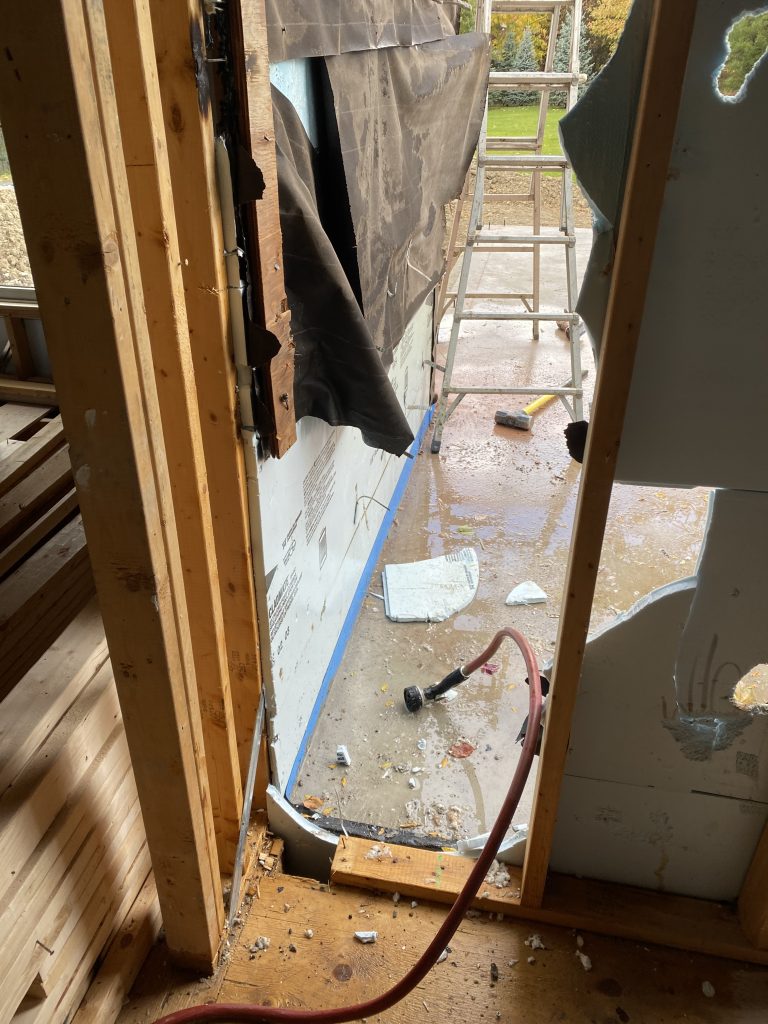
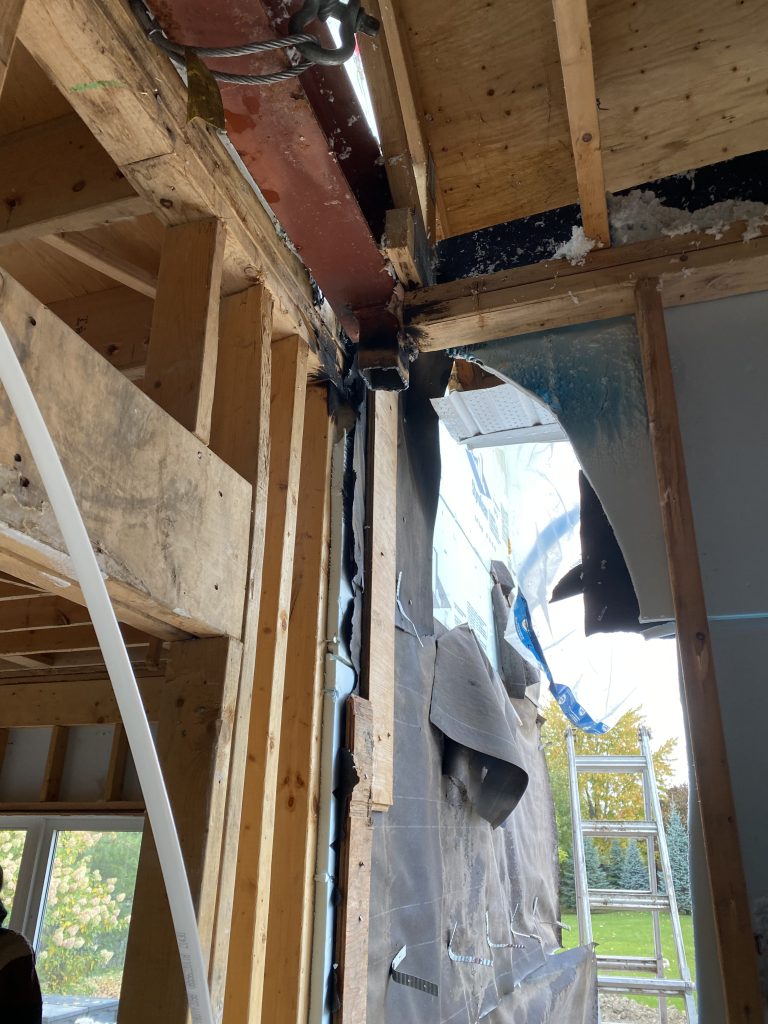
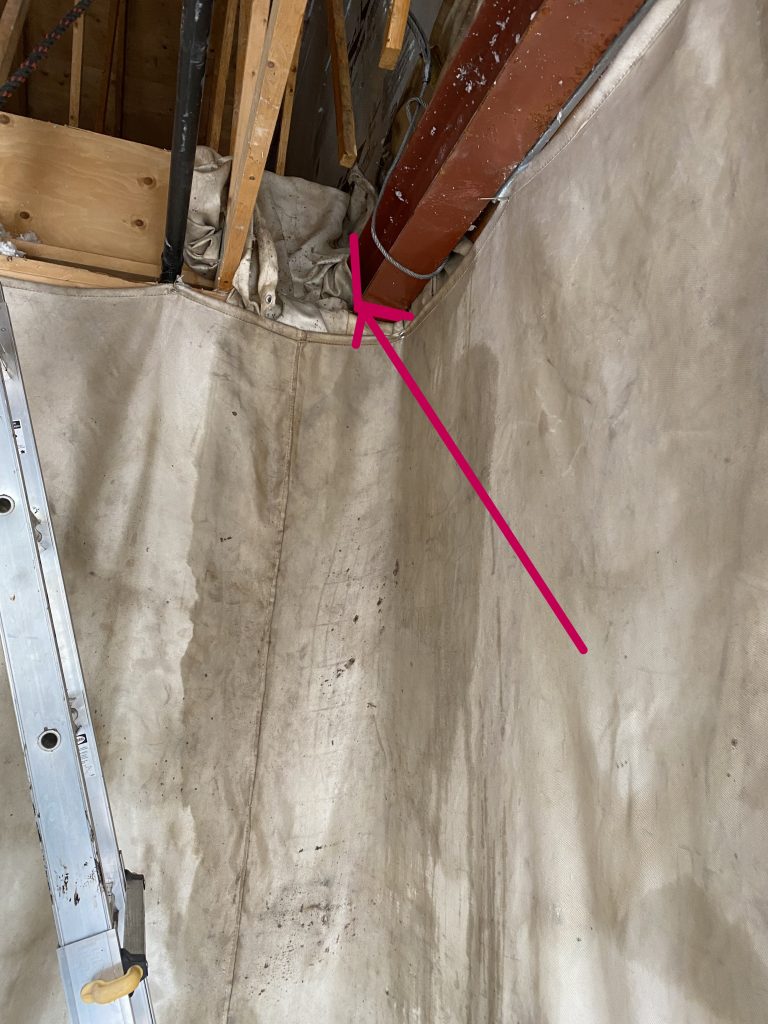
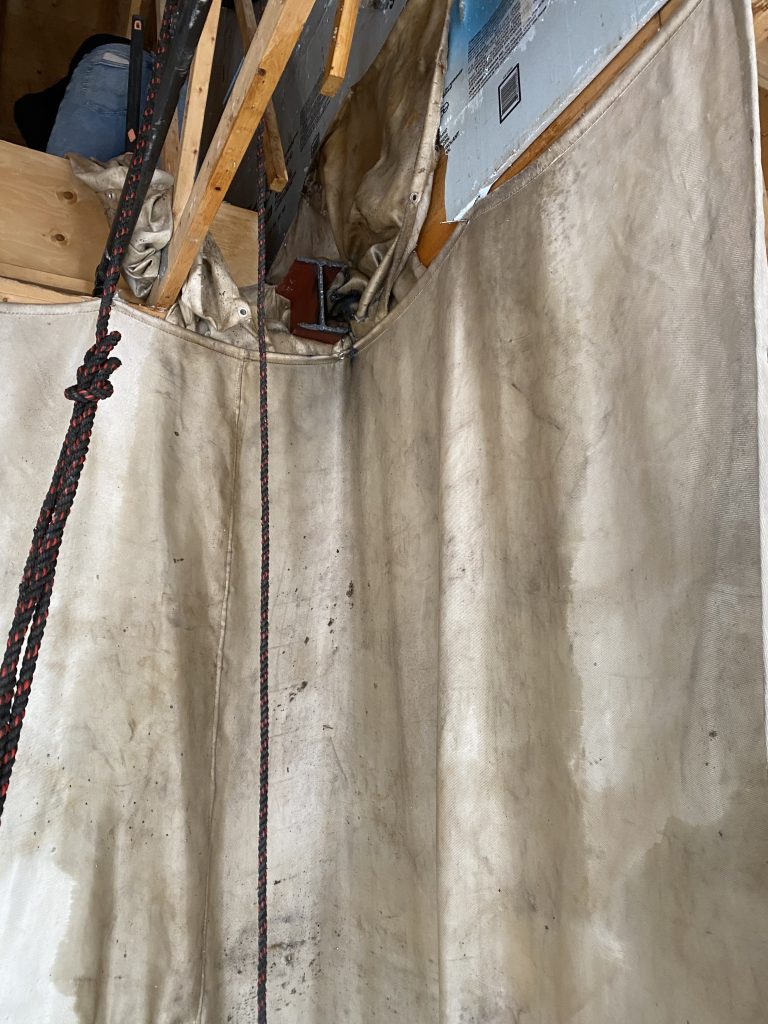
We usually begin with a clear plan for fire prevention that includes using fire blankets surrounding the beam being cut. We also tend to install heat shields to protect the plywood and 2x4s that are too close to the cutting spot. Then we discuss where spark watchers must stand and what they have to watch for. Each spark watcher has a two fire extinguishers.
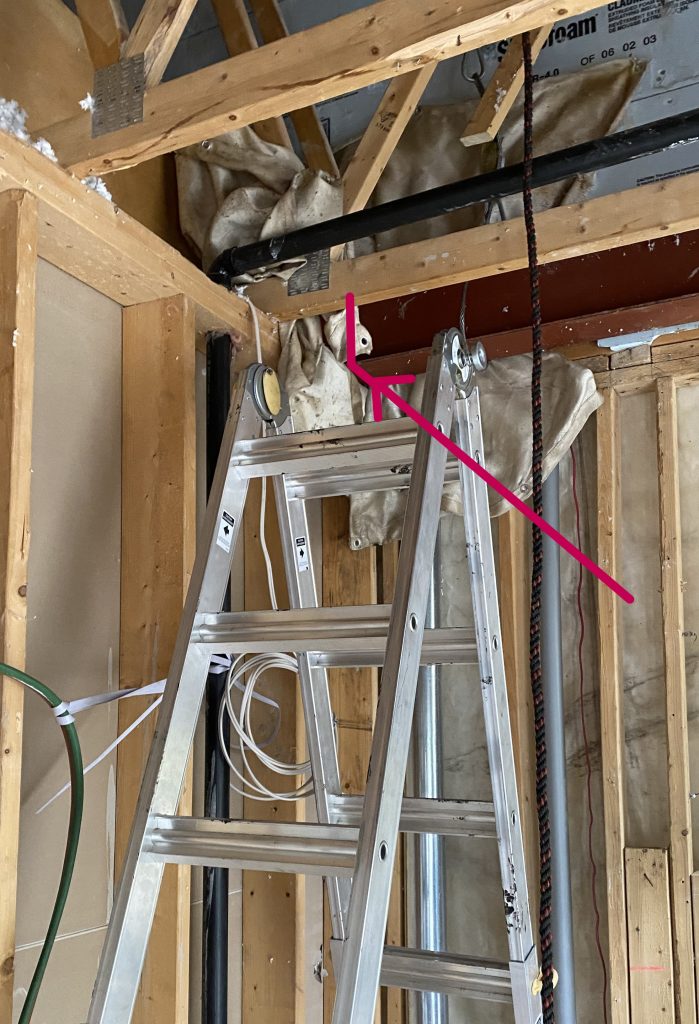
The most experienced fire watcher has a hose connected to the open tap faucet and is standing behind the worker who is cutting steel with the torch. This most experienced fire watcher sprays water on all surfaces including fire blankets, shields, 2x4s and insulation. Then the torch cutting begins. The owner usually runs out shortly after the cracking the acetylene valve.
Torch cutting in apartment building under construction is a pleasure. Usually most torch cutting takes place on the ground and the clean place welcomes the worker with a torch. Sometimes the minor clean up is necessary to eliminate flammable debris. The foreman representing the client monitors the progress and offers help if necessary.
Mobile welders must pay attention, however, maintain the proper distance to storage of insulation materials, fuel storage and other flammables storage. The separation of between the torch cutting place and the other contractors is necessary. And, we use extensively red tape with proper signage and custom barriers with fire blankets. Other contractors appreciate our help in this regard.
The industrial building construction creates multiple risks for torch cutting. First of all, some flammable chemicals could be already present in the facilities and we are not aware of it. Also, some other more specialized construction materials can be combustible.
This place is usually crowded with tradesmen and contractors of all sorts. That is why the role of spark watcher tends to transform very quickly to public watcher. We usually enter industrial building construction with more helpers since many obstacles create the need for more helpers. The H&S professional usually has no idea about advanced torch cutting but it is useful to issue a hot work permit.
The torch cutting in these facilities take place on heights and we have to use some kind of work elevated platforms or it take place on the mezzanines. We use for fire hazard mitigation thick tarps separating the public from us and for fire protection of sophisticated equipment we use thick fire blankets. Often the preparation prior torch cutting takes 80% of time.
The spark watchers must stand on the ground below with fire extinguishers ready. The area below must be taped off with a red tape.
Torch cutting in demolition projects is difficult, complex, and dangerous. It also requires special kind of torches, we call them demolition torches. They are much longer and heavier with a long and comfortable handle. And of course, they gobble gasses like V12 gobbles gasoline.
There is a good reason why we recommend to use these torches. These torches allow the worker to back off from the steel. In demolition project, the steel is often under unpredictable tensions, and workers must proceed with extreme cousion.
Prior every cut, the worker must analyze the tensions of the element based on forces acting on it. Most importantly, he must pay attention to the movement of steel being cut. Therefore, he must plan these cuts as he moves forward. It is also a very goo idea to make cuts in stages.
First cut, the one toe of the angle, both flanges of the channel, both flanges of the beam, and then back off and observe the movement of steel. Secondly, we recommend cutting 50% to 70% of remaining steel until you will see the movement of the element. Once, you know which direction the steel element will move then you must decide if you want to continue cutting or you prefer to release the tension somewhere else prior finishing this cut.
Best torch cutting workers gain their experience cutting trees in the bush with a chainsaw. They have to be able to cut these trees in variety of different positions since many of these trees are dead and have already fallen to the ground but not completely. Some are steel attached to the neighboring trees. The stresses in the wood of the trunk are similar to stresses of the steel in demolition project
Torch cutting in maintenance and machinery repair industry creates challenges that differ significantly from all other industries. The presence of fire hazard is extremally elevated, involve variety of different steels and possibility of other metals. And, these cuts are rather difficult.
In machinery repair and maintenance presence of different fluids elevate the fire hazards. Some fluids are very combustible and others do not burn at all. Vapor of some can cause explosion. Fluids that not burn can get very hot and cause severe burns.
Another issue is presence of greases. Similarly to fluids some burn and others do not burn at all. Aside of elevated fire hazard the burns are more severe due to viscosity of the burning grease. The burning grease can act as a very hot glue that burns your skin.
Due to elevated fire hazard and severe burns hazard in the machinery, we must drain all fluids and wash the whole machinery. Certainly, any tanks must also be washed inside. Then we may proceed to torch cutting
We also tend to test the places where we must do the cuts with propane torch. We do test with our propane torch in situations when we suspects pockets of fluids and greases.
Some paints are very harmful to workers when in contact with flame. Others are much less harmful but they release unpleasant vapors. Still many may ignite when heated up to certain temperature. Therefore, you have to know exactly the hazard you are dealing prior torch cutting. Remember, fire hazard is real in such situations.
Even if you know already the hazards specified on documents, we would recommend testing with the demolition torch and with welding helmet with respiratory system on.
Additionally, we recommend sandblasting places where you are going to make cuts.
Plastics, rubber, and plastic like components must be removed prior torch cutting steel in their proximity. We generally use grinders, tiger saws and skill saws to remove these plastic components. Also, variety of pry bars are very helpful in removal of plastic components from machinery prior cutting steel.
Presence of product in the machinery increases the fire hazard. You have to know specifically what it is and how this substance reacts to high temperatures. We usually insist on removal of client’s product prior cutting elements in contact with this product.
Due to variety of steels in the industry we tend to warm up the place where we are cutting very well. We take our time to do so. The warm or hot steel cuts better. We use often our propane torch to black up the spot and then we use demolition torch to warm up the steel even more. Finally, we use heavy duty torch to cut the difficult to cut steel.
Since we do not know what kind of steel alloy we are cutting we ware welding helmets with full respiratory system.
Aluminum elements must be removed from the machinery prior cutting steel in the proximity of their presence. The aluminum will disintegrate when put in close proximity to a burning torch. The expensive aluminum elements will be completely destroyed.
Many of these cuts in maintenance and machinery industry are difficult. Some torches can not reach the spot, and other torches that can reach do not generate enough heat. That is why having variety of torches is very important when torch cutting in maintenance and machinery industry.
This type of cut happens often in maintenance and machinery repair. The need for this cut arises when we must remove the specific structural element and we can not reach with our grinders to remove welds holding this element.
The heavy duty torch with tip number 7 or 8 will do the trick. The torch must be set to hot with flow of acetylene close to 75%. Such torch will simply melt away the fillet weld.
First, we have to warm up the whole length with the torch and then use a push weld starting from the beginning of the weld and going parallel to the filet weld joint. Preferably, you should not use your torch’s blowing lever at all since you could scorch the structural element. The high heat of the torch should wash away the filet weld.
