


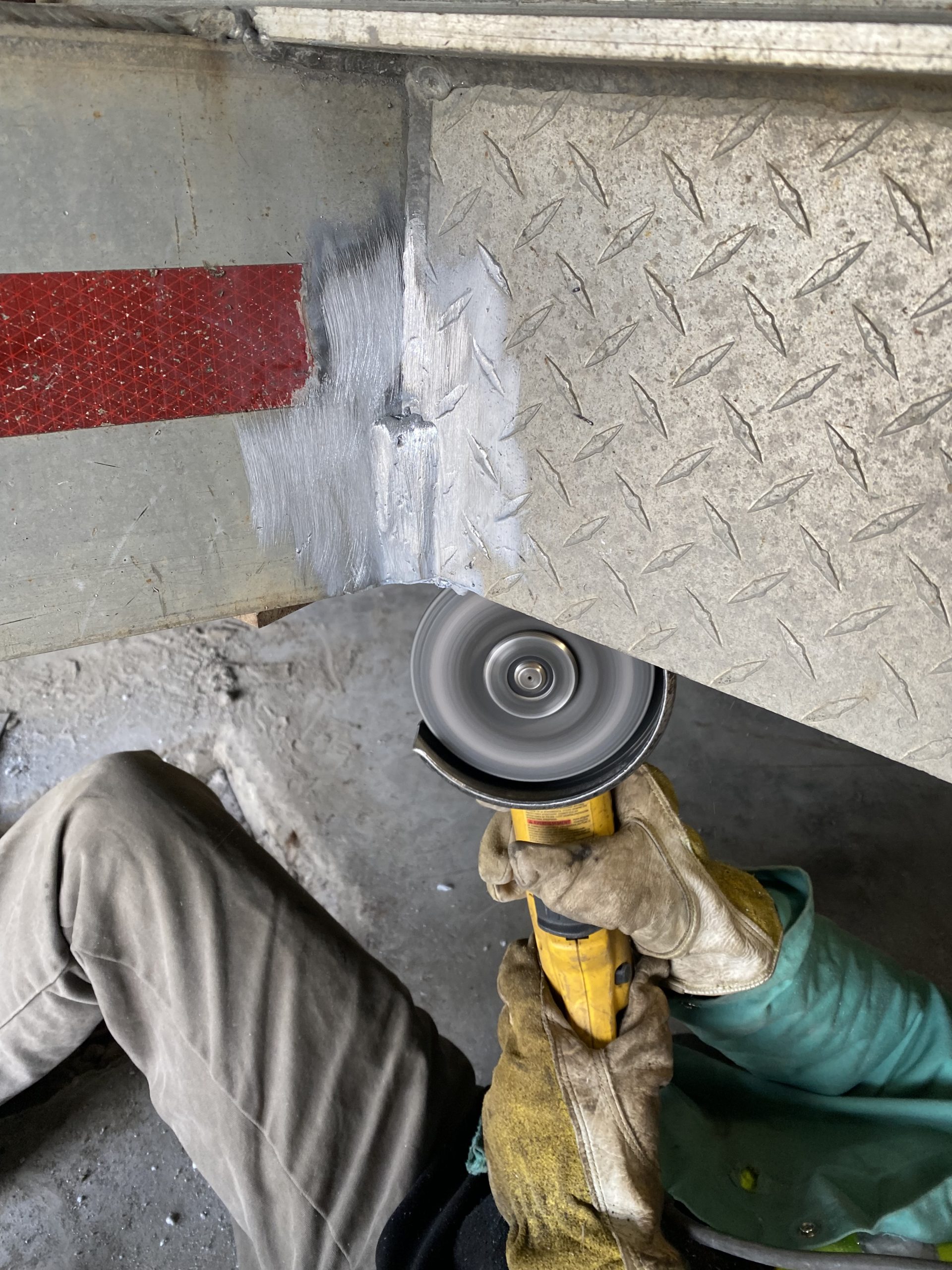
W Portable Welding & Repairs provides welding repair services to aluminum trailers in our shop at 5558 Clandeboye Dr. in Lucan. In the shop we not only provide welding services to fix cracks and other damages such as holes. We also install structural and other improvements to protect the integrity of your aluminum trailer. We also install new hitches or axles but mainly we specialize in fixing cracks. We perform these welding repairs in the inspection stations using our mobile welding service. Many shops provide replacement of axles or hubs as well as hitches. However, when you face structural damages of your aluminum trailer you will be looking for a more specialized welding shop. Let us show you what experienced high tech aluminum welder can do for you.
You can contact us and send multiple images of your damaged aluminum trailer. You can also text us images and videos on the phone number provided there. After we do an excellent job, please leave the 5 stars review of our service.
If you have questions regarding our welding capabilities pleas visit our innovative product weldments page where we present welding on cranes, heavy equipment and trains. Our metal fabrication page will lead you to our aluminum fabrication. And, we also weld aluminum in mobile welding settings.
Most aluminum trailers develop structural cracks due to user/owner negligence, manufacturing imperfections, weather and aluminum physical attributes. Aluminum trailers are excellent for towing by pickup trucks or other light vehicles. Their relatively light weight reduces fuel consumption and they look great on the road. Unfortunately, they crack relatively easily.
Especially, single axle aluminum trailers tend to crack close to the axle. Here is the example of such crack
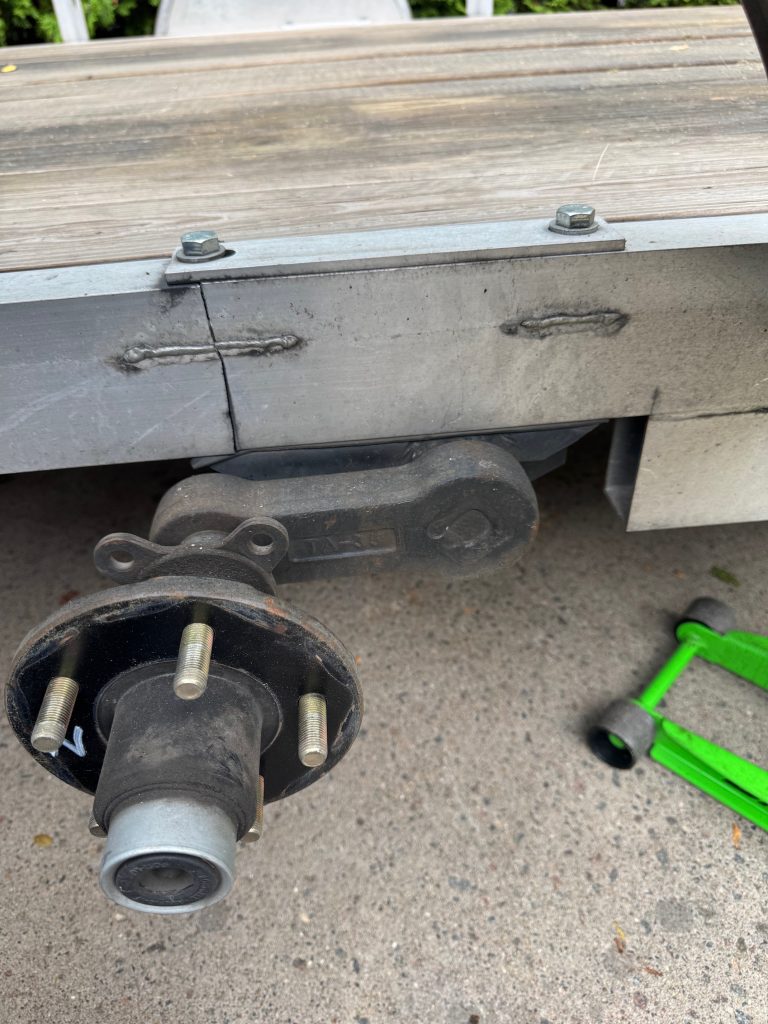
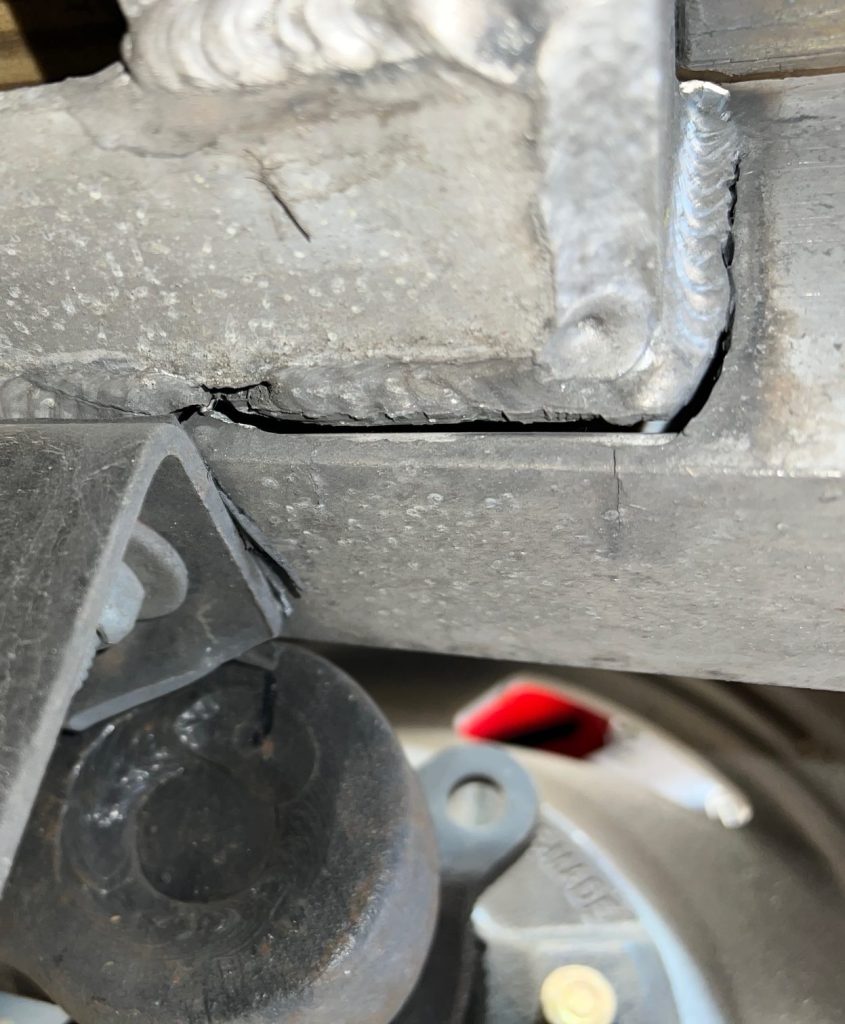
And the crack has started at the hole in the frame for the steel bolt visible in the image.
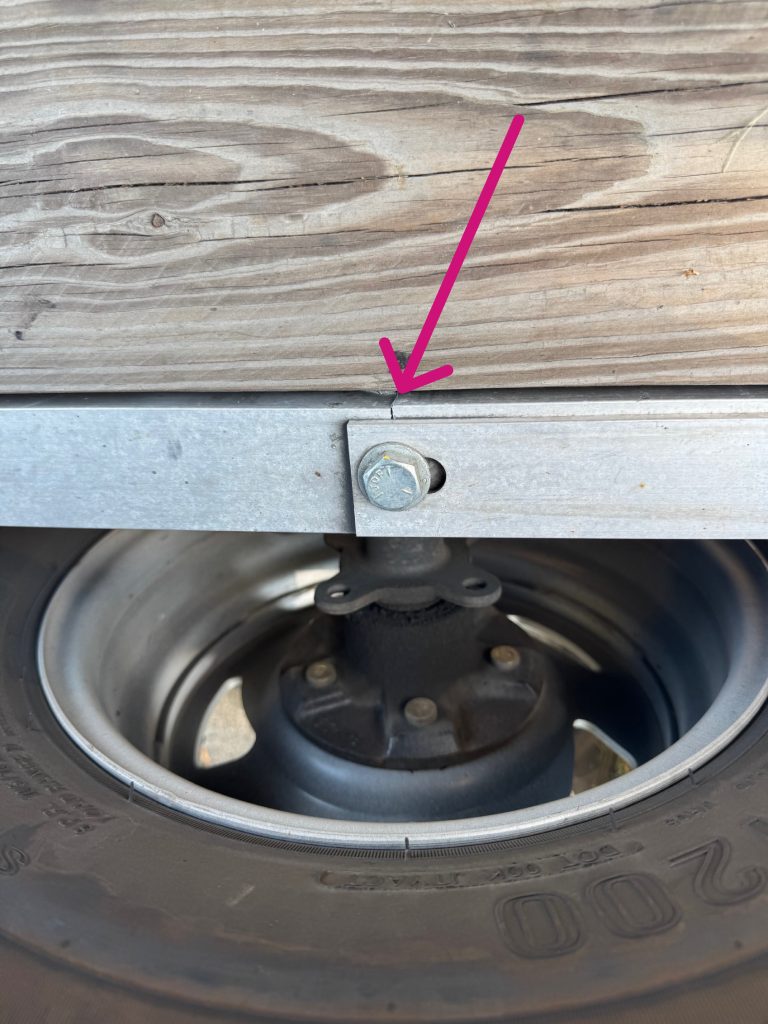
The major cause was probably driving relatively fast over the pothole with one wheel going really deep down. That is why if you plan to buy a relatively long aluminum trailer, I highly recommend double axle models since they take potholes much easier.
Most aluminum trailers develop structural cracks due to overload, impact or ice damage in winter. However, one undelaying factor is very common for them. The main cause for cracking aluminum trailer is owner’s negligence.
Owner overloads the trailer since he/she does not know the maximum load of the trailer. To make things even worse, the owner does not use strong tie downs. The owner or employee positions a heavy concentrated load close to the tongue and does not use strong tie downs. The loose tie downs, whether chains or straps, cause load bouncing that damages the structure of the aluminum trailer. Cracks on top[ of the frame signal heavy load bouncing. And if you find weld cracks on the tongue than definitely you we driving with loose straps.
Here is the trailer that has been heavily neglected by its owner.
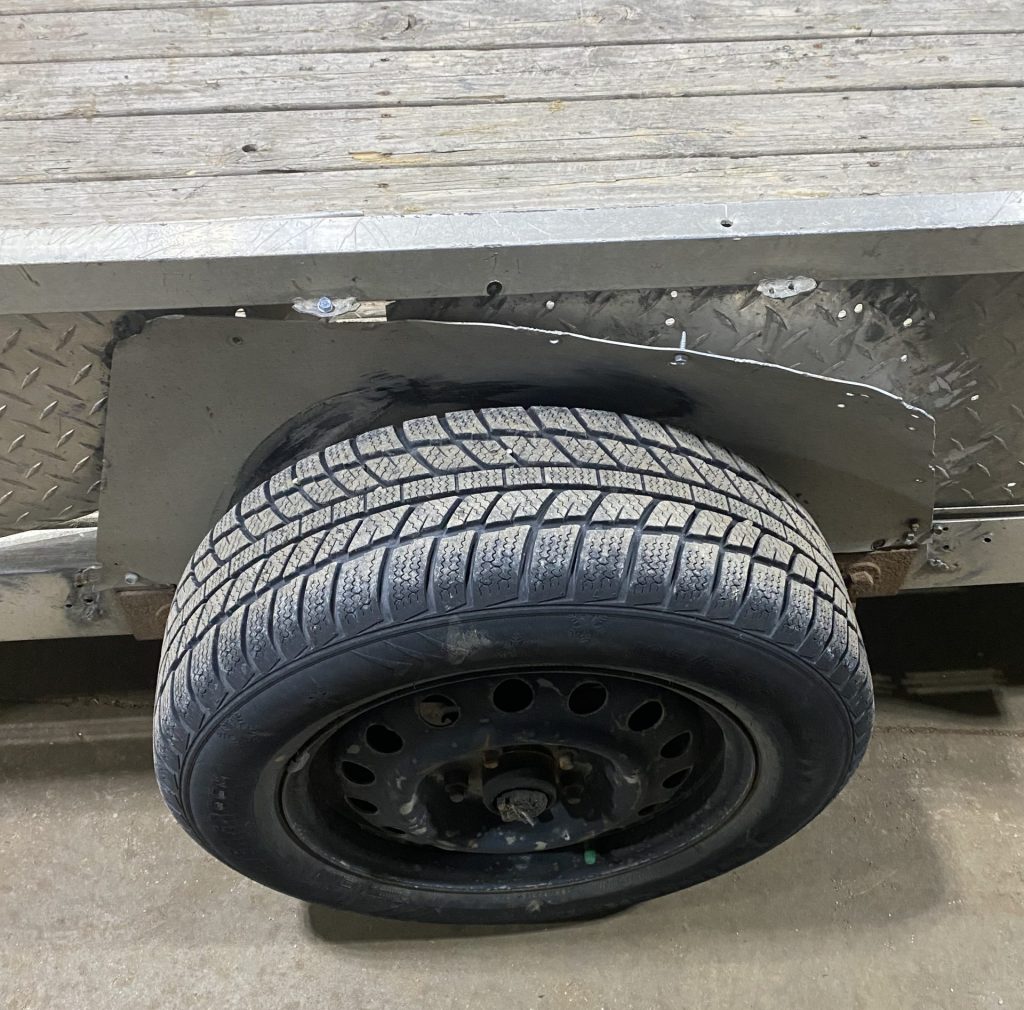
Driving fast on bumpy road with your aluminum trailer with heavy loads cause cracks in the frame too. The impact damages are directly proportionate to the speed. Faster you drive with your load, bigger the cracks. These cracks usually appear at the bottom of the aluminum frame.
Manufacturing imperfections and cost cutting also contributes to structural cracks of in your aluminum trailer.
Manufacturing imperfections relate to lack of welds, imperfect welds or short welds that weaken the aluminum frame of your trailer. Lack of weld is rather less common cause but imperfect weld or related short weld are very common. Aluminum welding requires high technology welding machine and experienced welder. Any issues with welding machine reflect on aluminum welding right away. Changing employee from experienced welder to less experienced but cheaper welder will cause imperfect welds or short welds.
These imperfect welds sometimes look relatively well but they are lacking penetration. Therefore they will not sustain the heavy loads or higher impact. The short welds is a sign of inability to control temperature during welding aluminum by less experienced welder. The welder makes short welds to cool off the aluminum weldment since he is afraid of weld collapse and creation of permanent damage.
Cost cutting goal is to make profit on the sale of aluminum trailer to you. The aluminum material is rather expensive and therefore by using it less manufacturers create profit and reduce the selling price. The main manufacturing sin is to use thin walled material that sustain the static load but will not sustain dynamic loads. These thinner elements are also more prone to material cracks under higher impact. Certainly, welding thin walled aluminum makes the welders job much more challenging too.
Another manufacturing sign is to use shorter elements or less expensive elements. The shorter elements make will maintain the dimensions of your trailer but they will reduce the overlap and therefore they are directly contributing to short welds. The cheaper shape is another technique to reduce the production costs. Instead of beam, manufacturer can use channel and therefore often reduce its cost.
All Canadians love summer, but only some of us love winter. If aluminum trailer could speak, it would say “I hate winter”. In winter months aluminum trailers accumulate moisture in many imperfect welding joints and then the expansion of ice caused separation of these imperfect joints. Additionally, aluminum trailers corrode rapidly when exposed to salt products that we put on the roads and driveways. This corrosive action attacks the frame from the bottom and especially causes havoc in corners of aluminum joints. Therefore, if you are using an aluminum trailer in winter, it is a good idea to wash it the bottom of the frame and have a garage for your aluminum trailer.
Let me summarize aluminum physical attributes in one simple statement. Your steel trailer can sustain abuse but the aluminum trailer won’t. Aluminum trailer does not take as heavy loads and does not tolerate heavy impact. The soft pure aluminum will dent after gentle impact but alloying it with other metals makes it much stronger but also more expensive therefore you cannot expect sophisticated aluminum alloy in your trailer. Aluminum has high malleability and can be easily bent, but cheap alloys do not bent so easily and they rather crack than bent. That is why thin walled aluminum elements first crack and then bent.
The yield strength of aluminum used for trailers is about 276 MPa and this aluminum is prone to fatigue damages. The high carbon steel is yield strength is 600 – 700 MPa therefore your steel trailer can take a beating.
Aluminum density is 2.70 g/cm3 and steel density is 7.75 to 8.05 g/cm3 Therefore steel is almost 3x heavier and that is why you love your aluminum trailer.
The non structural cracks are very common for both aluminum trailer and steel trailer. These weld cracks usually surround mechanical components, or are material cracks in the walls or wall structures. Areas surrounding hinges, tie downs and structural elements of doors are especially prone to cracks. These type of crucks are usually result of fatigue and almost all 5 years old aluminum trailers tend to develop them.
Cracks and damages of back gate develop when backing up your trailer and can cause a permanent door damage
Towing a structurally damaged aluminum trailer is prohibited by law and it is very dangerous that is why inspections are needed. The structurally damaged trailer can loose the load through floor collapsing, or it can loose balance due to load shift caused by fractural disintegration when the frame separates from the structure.
Damages to the tongue are especially dangerous since the broken tongue is the reason for many accidents. Separation of hitch from the aluminum tongue does not happen too often but separation of tongue from the aluminum frame due to cracked welds is rather common. Bent aluminum tongues must be replaced since micro cracks have settled there.
The aluminum trailer can have material cracks on the frame and weld cracks on the frame. Obviously, the material cracks on the frame are more dangerous since they signal a complete failure of the frame’s element.
In most cases the replacement of the element is necessary instead of welding, especially if these cracks are large and elongated. Obviously, if we find that you have a substandard elements in your frame with thin walls replacing all of them is impossible due to the high cost. Therefore, we tend to replace the worst damaged with severe material cracks and the rest we just fix them by welding.
We also tend to replace the most crucial elements with severe material damages
Bent aluminum elements must be replaced. Unfortunately, disregarding the cost, the bent aluminum elements must be replaced. These bent aluminum elements do contain microcracks and these microcracks will consolidate under the impact resulting in the large material crack. Once again, please remember the aluminum trailer is very different than your steel trailer.
Weld cracks can be fixed by removing the weld and then welding back the elements. If possible we tend to either increase the size the weld by 3 x or place the aluminum “fish-bracket” or “fish-plate” after fixing the weld and then weld the fish-bracket or fish-plate to the frame. In this way we provide the additional support for relatively weaker spot.
We also do multiple other improvements to add additional functionality to trailers. Here is the example of one of these functionalities that improves the mounting of the fender.
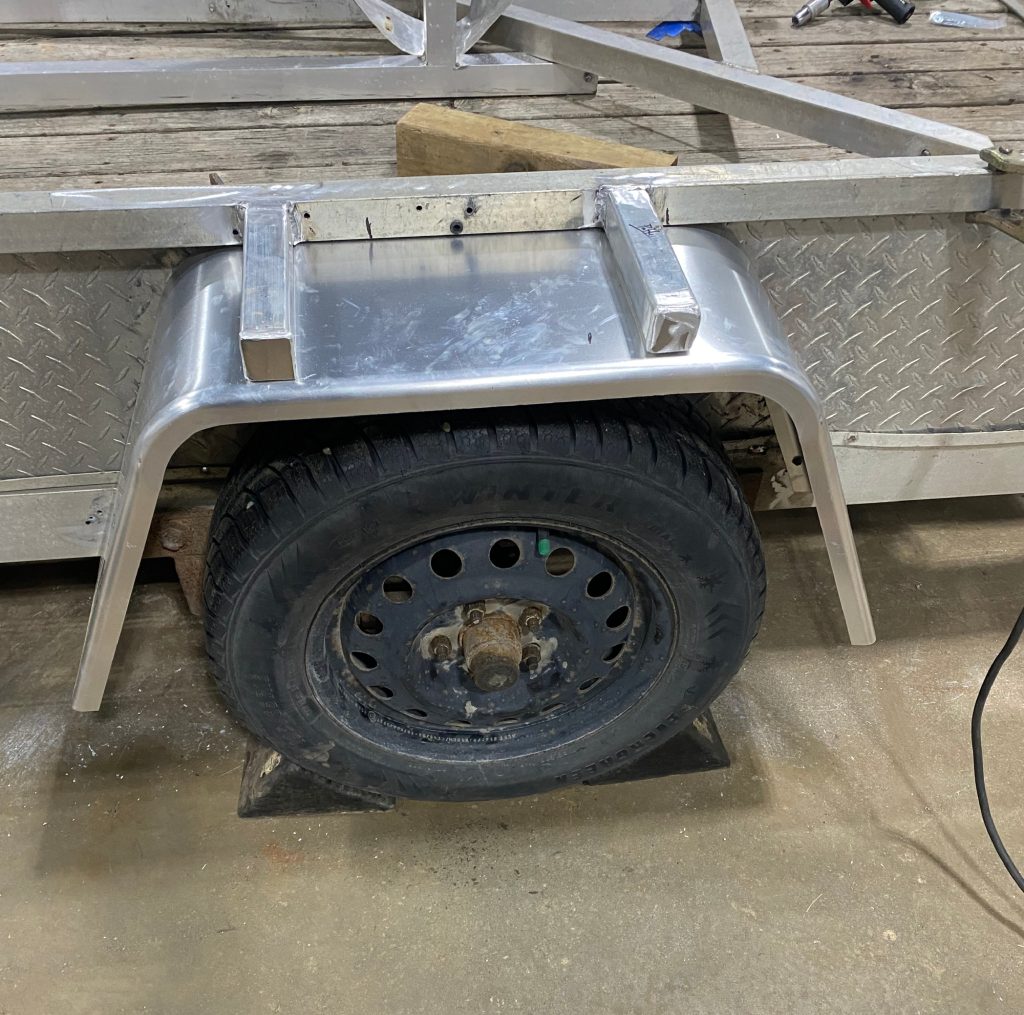
Majority of our structural improvements focus on multiple passes large welds, “fish” plates and “fish” angles, but we also offer additional strengtheners and gusset plates. We tend to add additional strengtheners and gusset plates to aluminum trailers with manufacturing imperfections. Since we can not change how the trailer was fabricated and what material was used, we tend to improve the structural strength in most needed places.